Beyond Lifespan: Why Defining Your Purpose Statement Is the Ultimate Longevity Strategy
DAILY HABITS
Oct 5, 2026

When we talk about longevity, the conversation almost always turns to physical metrics: optimal daily step counts, cold plunges, intermittent fasting, or carefully curated supplement stacks.
While physical health is undoubtedly important, we often overlook a psychological variable that may play a significant role in determining not only how long we live, but how well we live:
A defined sense of purpose.
I explain to my clients that creating a clear purpose statement isn't simply an exercise reserved for corporate mission statements or self-help journals. A strong sense of purpose is increasingly recognised in scientific research as an important component of healthy ageing, psychological wellbeing and resilience.
Because longevity isn't simply about adding years to your life. It's about adding life to those years.
1. The Science of Purpose and Healthspan
Research consistently links a stronger sense of purpose with a range of positive health outcomes.
Lower All-Cause Mortality
Long-term epidemiological research, including studies using data from the Health and Retirement Study, has found that people with a stronger sense of purpose tend to have a lower risk of all-cause mortality than those reporting a weaker sense of purpose.
While this does not prove that purpose itself directly causes people to live longer, the association is compelling and has been observed across multiple studies and populations.
Reduced Stress and Inflammation
Chronic stress and persistent low-grade inflammation, sometimes referred to as "inflammaging," are associated with many conditions that become more common with age.
A meaningful sense of direction may help support healthier psychological and physiological responses to stress. Research has linked greater purpose in life with markers of better health and lower levels of some inflammatory processes.
Cardiovascular Protection
A growing body of research examining psychological wellbeing suggests that people with a stronger sense of purpose may have a lower risk of cardiovascular disease and related events.
This highlights an important point: our psychological wellbeing doesn't exist separately from our physical health.
Cognitive Resilience
Purpose may also contribute to healthy brain ageing.
Studies have found associations between a stronger sense of purpose and a reduced risk of cognitive decline. Having meaningful goals and remaining mentally and socially engaged may help support cognitive resilience as we age.
The message is simple:
Your reason for living may matter to your health just as much as the habits you practise to protect it.
2. Lessons from the Blue Zones: Ikigai and Plan de Vida
I often explore the concept of ikigai during my breath, movement and mindset sessions with clients and patients.
The relationship between purpose, connection and longevity is often discussed in relation to the world's so-called Blue Zones — regions identified for their unusually high proportions of people living to very old ages.
In Okinawa, Japan, the concept of ikigai is commonly associated with having a reason to get up in the morning — something that gives life meaning and direction.
Importantly, the traditional Okinawan approach to ageing is not simply about finding one grand purpose. Purpose is often woven into everyday life through relationships, contribution, community and meaningful activity.
Similarly, in Costa Rica's Nicoya Peninsula, the concept of plan de vida, or "life plan," is often described as a sense of purpose and responsibility that can be connected to family, community and one's role in society.
These cultures remind us that longevity isn't only about what we do to our bodies.
It is also about having a reason to keep participating in life.
3. How a Written Purpose Statement Can Shape Daily Decisions
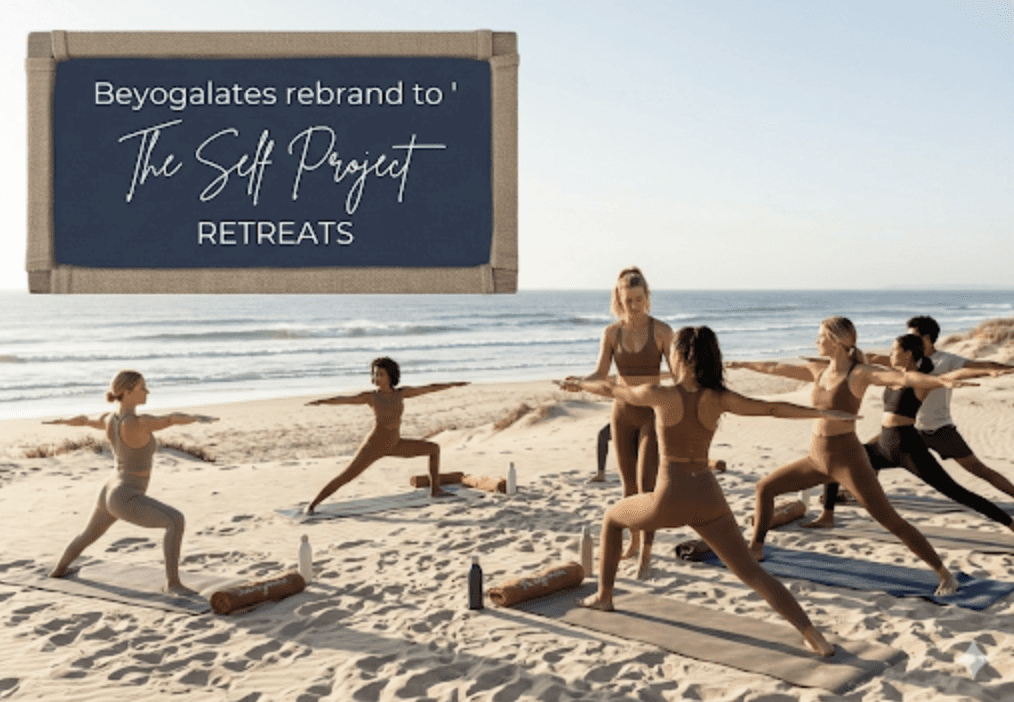
I regularly encourage my community to create — and revisit — a personal purpose statement during Self Project Workshops and Retreats.
Not simply as a corporate-style vision statement, but as a practical tool for personal growth, vitality and wellbeing.
Having a vague idea of what matters to you is a good starting point. But writing down a concise purpose statement can turn abstract values into an actionable guide.
It Reduces Stress and Decision Fatigue
When your overarching direction is clear, everyday decisions can become easier.
A written purpose statement can act as a filter, helping you recognise what deserves your time and energy — and what doesn't.
It can make it easier to say no to distractions, unhealthy environments and commitments that continually drain you.
Your purpose doesn't make every decision for you.
But it can help you ask:
"Does this move me towards the life I actually want to live?"
It Encourages Proactive Health Behaviours
I see this transformation with clients again and again.
When people connect their health habits to something bigger than appearance or short-term goals, their motivation can change.
They may become more committed to regular movement, quality sleep, nourishing food, meaningful relationships and preventative healthcare — not because they feel they should, but because they recognise that their health supports the life they want to live.
Your body is the vehicle through which you experience and contribute to your life.
Looking after it is therefore not simply an act of discipline.
It can be an act of purpose.
It Builds Psychological Resilience
As we age, life inevitably brings challenges, losses and major transitions — career changes, relationship changes, retirement, empty nests and the loss of people we love.
I've experienced this both personally and professionally.
A clear sense of purpose can provide an anchor through these transitions. It reminds us that our identity is larger than a particular job, role, relationship or stage of life.
Purpose gives us something to continue moving towards, even when circumstances change.
How to Draft Your Purpose Statement Today
A longevity-focused purpose statement doesn't need to be grand, impressive or world-changing.
It simply needs to be authentic to you.
Start by asking yourself three questions:
1. What do I love doing, experiencing or learning about?
2. What skills, strengths or qualities do I naturally offer others?
3. How could I use those strengths to create a positive impact on my family, community or the world around me?
Then bring your answers together using this simple framework:
My purpose is to use my [skill/passion] to support [who I help] so that [positive outcome].
For example:
My purpose is to use my creativity and ability to listen to support the people around me, so that we can build a more connected, healthy and meaningful future together.
Your statement may change over time — and that's okay.
Purpose isn't something you necessarily discover once and then lock away forever. As we grow, experience new chapters and develop new priorities, our understanding of what matters can evolve with us.
Beyond Living Longer
Living longer is only half the goal.
The real objective is to live more vital, meaningful and connected years.
We can track our steps, optimise our sleep, lift weights, eat well and take care of our cardiovascular health — and all of these things matter.
But we should also ask a deeper question:
What are we staying healthy for?
Perhaps one of the most powerful longevity strategies isn't another supplement, protocol or health metric.
Perhaps it's knowing why you want to be here.
Take some time today to write your purpose statement.
You may be giving your future self something far more valuable than additional years.
You may be giving those years meaning.
Namaste,
Lisa